The sofa is the biggest decision you'll make in a small living room, and it's the one people most often get wrong. Buy too large and the room feels swallowed; buy too small and it looks lost and uninviting. Get it right, though, and a single well-chosen sofa anchors the whole space, makes it feel generous rather than cramped, and gives you somewhere you genuinely want to sink into at the end of the day.
Measure before you fall in love#
Almost every sofa regret starts with skipping the tape measure. A sofa can look perfectly modest in a vast showroom and arrive looking enormous in your actual room, so the numbers have to come before the swooning. Measure the wall or space where the sofa will sit, then mark its footprint on the floor with tape so you can see exactly how much room it will claim and walk around it. That outline tells you far more than any picture.
Then measure the journey in, which is the step people forget until it's too late. Check the doorways, the hallway turns, the staircase, and any tight corners between the front door and the room. A sofa that fits the room perfectly is no use if it can't physically get there, and a piece that has to come apart or go back is a hard lesson. If your access is genuinely tricky, look for sofas that arrive in sections or with removable legs, which slip through narrow openings far more easily.
Leave breathing room around the finished piece, too. You want a comfortable path to walk past it and a little air between the sofa and the surrounding furniture, because a sofa crammed wall-to-wall makes a small room feel tighter than it is. A slightly smaller sofa with space around it almost always feels better than a larger one wedged in with no room to move.
Look for shapes that take up less visual space#
Two sofas can have the very same seating capacity and yet feel completely different in a small room, and the difference is all in the shape. The features that make a sofa visually heavy — thick rolled arms, a deep seat, a high solid back, a skirt that hides the floor — also make it eat the room. The features that keep it light do the opposite.
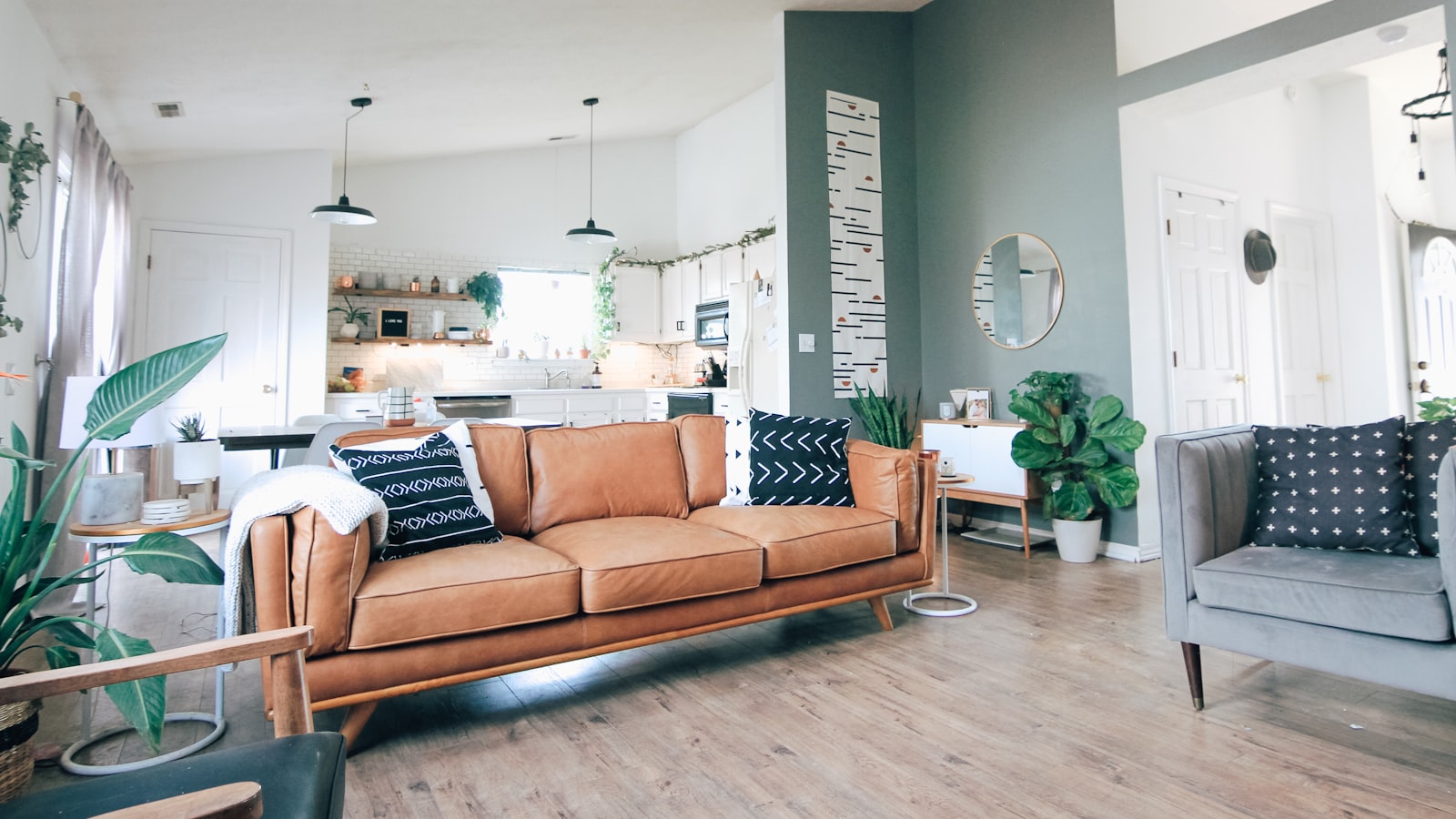
Slim arms are the easiest win. Chunky arms can swallow a foot or more of length without adding a single seat, while a sofa with narrow or low arms gives you the same comfort in a smaller footprint and looks far less bulky. Raised legs are the other quiet hero: when a sofa stands on slim, visible legs, light and floor flow underneath it, which reads as airy and open. A sofa that sits flush to the ground like a solid block stops the eye and weighs the room down.
In a small room, the floor you can see is the cheapest space you own — a sofa that lets light slip beneath it feels generous, while one that blocks the floor feels like a wall.
Think about the back and depth as well. A lower-backed sofa keeps more visual air above it, which helps a small room feel taller and more open, and a slightly shallower seat leaves more floor in front for a coffee table and a clear path. None of this means uncomfortable — it means choosing the version of comfortable that gives the room back some breathing space.
Get the scale right#
Scale is the quiet art of choosing a sofa that's the right size for the room, and it cuts both ways. The obvious mistake is going too big, but going too small is just as common and just as unflattering. A dinky two-seater floating in front of a large blank wall looks marooned and makes the space feel awkward rather than cozy. The sofa should feel proportionate — substantial enough to anchor the room, restrained enough to leave room to live.
Let the room's longest usable wall guide you. A good sofa fills a comfortable share of that wall without crowding the corners, leaving a little space on either side so it doesn't look jammed in. If a standard three-seater feels like too much, a generous loveseat or a compact apartment-sized sofa often hits the sweet spot, giving you real comfort at a footprint a small room can carry.
Be honest about how you actually use the space before you chase maximum seating. If it's mostly you and one other person, a deep loveseat you can both stretch out on beats a longer sofa nobody fully uses, and it frees up floor for an armchair or a side table that makes the room work harder. Comfort you'll feel every day matters more than a seat count you'll rarely fill.
Choose color and fabric you'll live with#
Once the size and shape are settled, the look comes down to color and fabric, and in a small room a calm choice pays off. A sofa in a soft, light tone that's close to your wall color tends to recede and let the room feel more open, while a dark or boldly patterned sofa becomes a heavy focal point that can shrink the space around it. That doesn't mean you can't have personality — it just means letting the cushions and throws carry the color so you can change your mind without changing the sofa.
Fabric is where everyday life meets your decision, so think practically about how the room gets used. A few considerations save a lot of regret:
- Favor a hard-wearing, tightly woven fabric if the room sees daily use, kids, or pets
- Choose removable, washable covers where you can, so spills aren't a disaster
- Run your hand over any fabric before buying, since comfort and durability are things you feel, not just see
Above all, pick a sofa you'll still love years from now, because it's a piece you live with daily and replace rarely. A timeless shape in a quiet color outlasts trends and adapts as your taste and your room evolve. Measure carefully, lean toward light and lifted shapes, get the scale honestly right, and choose a fabric built for your real life. Do that, and the biggest piece in your small room becomes its best one — the spot that grounds the whole space and welcomes you home every single day.