A big blank wall has a way of nagging at you. It stares back across the room, vaguely unfinished, while you wonder whether you need a giant painting you can't afford or a gallery wall you're nervous to attempt. But an empty wall isn't a problem to solve so much as a generous, flexible opportunity — a clean canvas waiting for whatever will make the room feel complete.
See the wall as a chance#
The first shift is in how you look at it. An empty wall feels like a flaw, a gap, something missing. Reframe it as the most adaptable surface in the room — the one place you can change dramatically without moving a single piece of furniture or spending much at all. Where a bare wall feels like pressure, a wall you've decided to treat as an opportunity feels like play.
It helps to ask what the wall and the room actually need before you reach for the obvious answer. Is the room dark and craving more light? A mirror might be the move. Does it feel cold and hard? Something textured and soft would warm it. Is it missing personality? This is the spot for art or objects that say something about you. The wall isn't asking for "decoration" in the abstract; it's asking for whatever this particular room is short on.
This also takes the pressure off getting it perfect on the first try. Almost anything you put on a wall can come down again, so there's room to experiment. You can lean a piece before you commit to hanging it, try one arrangement and adjust, and live with something for a while to see if it's right. A blank wall rewards a little courage and punishes almost nothing, which makes it one of the friendliest decorating projects there is.
Get the scale right#
If there's one mistake that makes wall decor go wrong, it's scale. A small frame floating alone on a wide expanse of wall looks lost and a little forlorn, like a stamp on an envelope. The single most important thing you can do is match the size of what you hang to the size of the wall. Big walls want big gestures; small walls want modest ones.
For a large, generous wall, think big. One oversized piece of art can fill the space with quiet confidence and is often calmer than a cluster of small things. If a single large piece isn't in the cards, a group of pieces arranged to read as one big shape does the same job — the trick is that the overall arrangement, not each individual frame, should feel proportionate to the wall. A handful of tiny frames spread thin will always look undersized; gather them tighter and let the group act as one large form.
The right size for a piece is set by the wall and the furniture around it, not by what you happen to own. When in doubt, go bigger — undersized art is the most common reason a styled wall still feels empty.
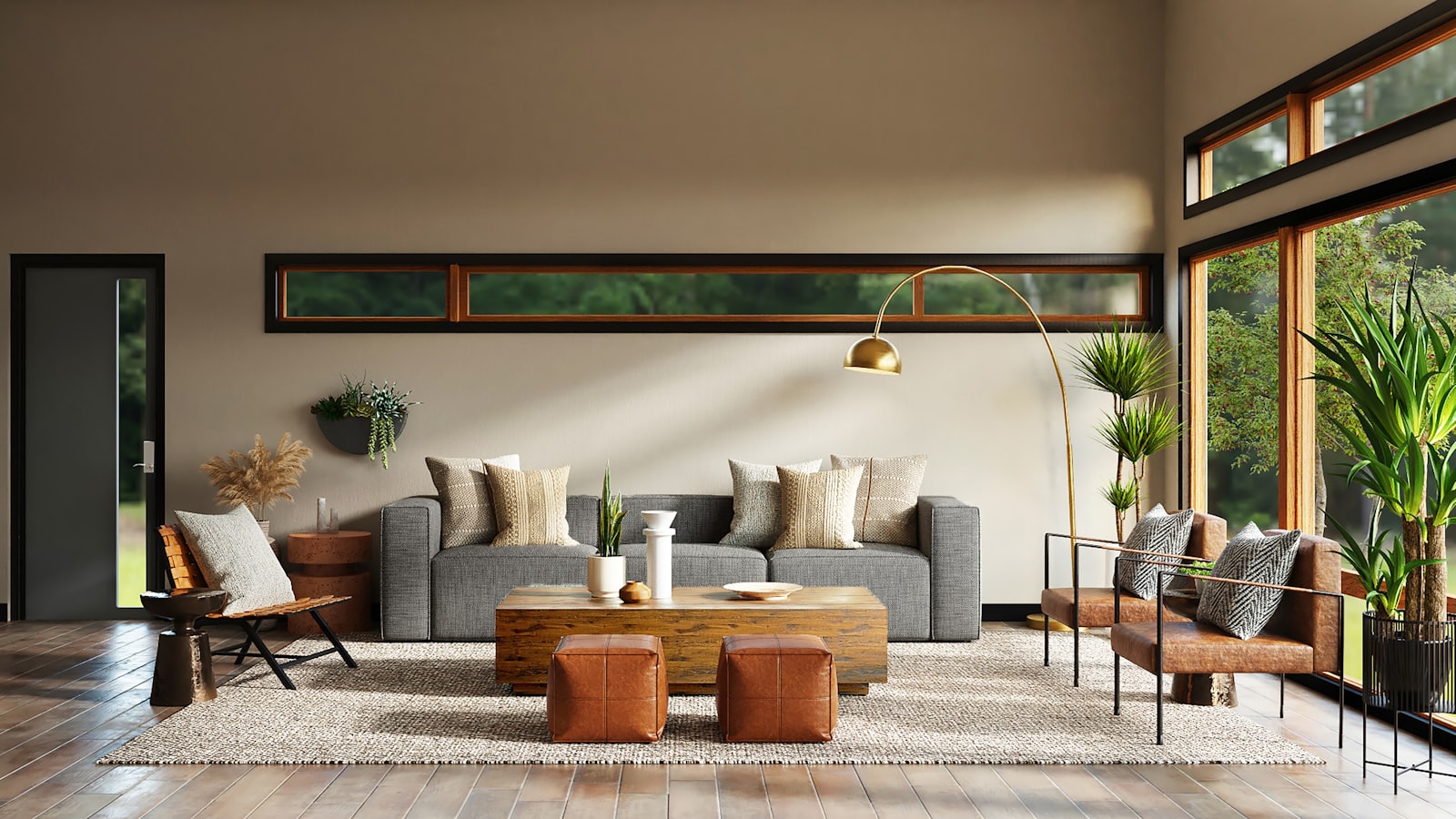
A reliable guide is to relate wall decor to the furniture beneath it. Art over a sofa or a bed generally looks best when it spans a good portion of the width of that piece — roughly two-thirds is a comfortable target — rather than a narrow sliver marooned in the middle. When the thing on the wall and the thing on the floor feel connected in size, the whole arrangement looks anchored and intentional. When they don't, even beautiful art can feel like it's floating off on its own.
Look beyond framed art#
Framed pictures are the obvious answer, but they're far from the only one, and the most interesting walls usually mix things up. Once you stop assuming "wall decor" means "a painting," a whole range of options opens up, each bringing something different to the room. Variety in what you hang is what keeps a home from feeling like a showroom of matching prints.
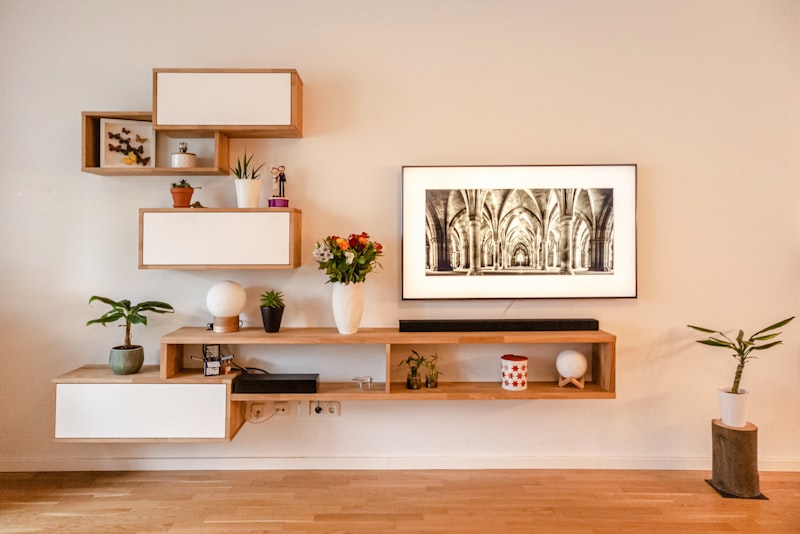
A mirror is one of the hardest-working pieces you can hang. It fills a wall the way art does, but it also bounces light around and makes a room feel larger and brighter — a genuine gift in a small or dim space. A shelf or a pair of floating shelves turns a flat wall into a tiny, changeable stage for books, plants, and objects you love, and you can restyle it whenever you like. Textiles bring softness and warmth that flat art can't: a woven hanging, a beautiful textile, a flat-weave rug hung like a tapestry.
A few directions worth considering for an empty wall:
- A mirror to add light and a sense of space, especially in darker rooms.
- Shelves to display a rotating mix of books, plants, and small objects.
- A textile, a hanging, or a single sculptural object for warmth and texture.
You can mix these freely. A wall might hold a large framed print alongside a small shelf and a leaning mirror, the combination feeling collected and personal rather than formulaic. Three-dimensional pieces — a sculptural object, a hat, a hanging planter — add depth that flat art alone never will, and they catch the light and cast little shadows that make the wall feel alive. The more you think in terms of "what would suit this wall" rather than "which painting goes here," the more original the result.
Hang it like you mean it#
Once you've chosen what goes up, how you hang it makes all the difference, and the rules are mercifully simple. The big one is height: the center of your arrangement generally wants to sit around eye level, roughly the height a piece would hang in a gallery. The most common error in homes everywhere is hanging things too high, marooned up near the ceiling with a sea of empty wall beneath. Lower is almost always better than higher.
Relate what you hang to the furniture below it, too. Art over a sofa, console, or bed should feel connected to that piece — close enough above it that the two read as a pair, not as strangers sharing a wall. A comfortable gap between the top of the furniture and the bottom of the art keeps them in conversation without crowding. When a piece hovers far above the sofa, the wall in between reads as a gap; when it sits at a friendly distance, the whole composition settles. Before you put a single hole in the wall, cut paper to the size of your pieces and tape them up to test the arrangement, and if you're drilling into anything that might hide wiring or pipes, pause and check, or call a licensed professional rather than risk it.
A blank wall, in the end, is one of the kindest blank slates a home can offer. Treat it as an opportunity rather than a flaw, get the scale right, reach past framed art to mirrors and shelves and texture, and hang everything at a height that talks to the room. Do that, and the wall that once nagged at you becomes the part of the room you're proudest of — proof that an empty space was never a problem at all, just an invitation waiting for your answer.