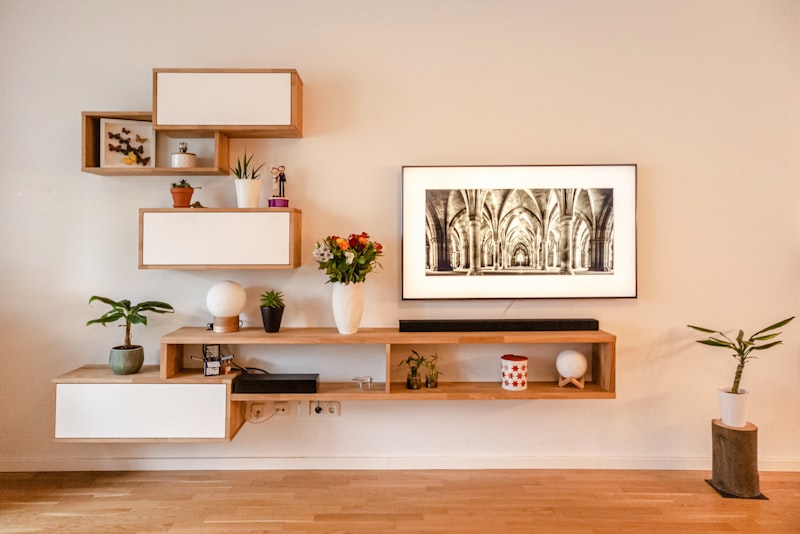
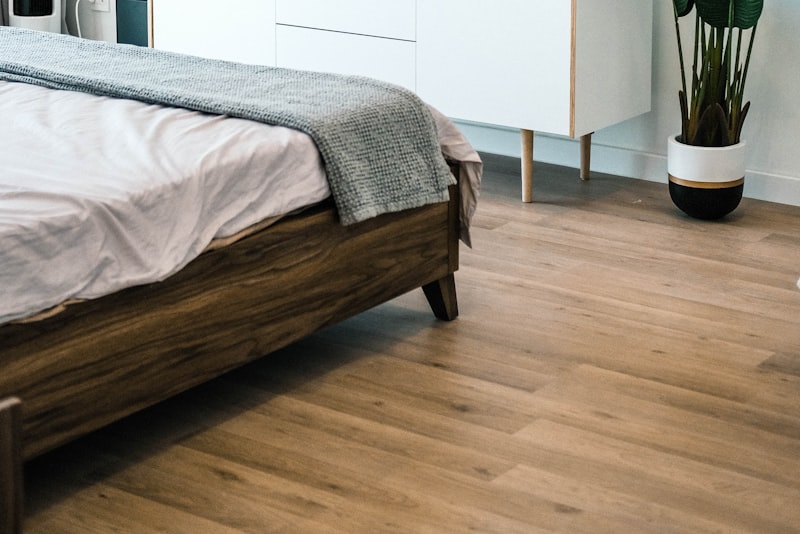
If your room looks lovely by day but falls flat at night, the culprit is almost always lighting. One bright fixture in the middle of the ceiling can light a room without ever making it feel good. The fix isn't more light — it's better-arranged light, built up in gentle layers that you can adjust to suit the moment.
Why one light is never enough#
A single overhead fixture does one thing: it floods the room from above with flat, even light. It's efficient, but it's also the reason so many rooms feel a little institutional after dark. That top-down glare erases shadow and depth, casts unflattering light on faces, and gives the eye nowhere soft to land. It's the lighting of a waiting room, not a living room.
The rooms that make you exhale the moment you walk in are almost never lit this way. They glow from several points at different heights — a lamp in a corner, a soft wash over the artwork, a warm pool of light by a favorite chair. That variety is what creates atmosphere. Light and shadow working together give a room dimension, the same way they give a photograph its mood. When you scatter sources around a space, you replace one harsh sun with a sky full of gentle glows, and the whole room relaxes.
So the first shift is mental: stop thinking of lighting as a switch you flip and start thinking of it as something you compose. You're not trying to make a room bright. You're trying to make it feel good to be in.
The three layers that change everything#
Good lighting comes down to three layers, and once you know them, you'll see every well-lit room differently. The first is ambient light — the overall, general glow that lets you move through a space safely. This is your ceiling fixture, but also the soft fill from larger lamps. It's the base coat. On its own it's functional but flat, which is exactly why the other two layers matter.
The second layer is task light: focused, practical light aimed where you actually do things. A reading lamp beside the armchair, a bright fixture over the kitchen counter, a lamp on the desk, a sconce by the bathroom mirror. Task lighting respects what you're trying to accomplish and stops you squinting through everyday moments. It's the most overlooked layer, and adding it is often the single biggest upgrade a room can get.
The third layer is accent light — the magic layer. This is light used not to see by, but to set a mood and draw the eye. A small lamp glowing on a bookshelf, a light washing up a textured wall, a candle, a string of warm bulbs, a picture light over art. Accent lighting is what makes a room feel intentional and inviting rather than merely illuminated.
You don't light a room to fill it with light. You light it to create pools of warmth and pockets of shadow, so the eye has somewhere to rest and the space has somewhere to breathe.
When all three layers are present, a room gains flexibility. Bright and practical when you need it, soft and intimate when you don't — all in the same space.
Building the layers in your room#
Start by walking through the room and noticing where light is missing. Most spaces have plenty of ambient light and almost no task or accent light, so that's where you'll add. The easy, renter-friendly way to do this is with lamps, because they require nothing more than a free outlet and let you place light exactly where the ceiling can't reach.
Aim for several light sources at varying heights so the glow lives at eye level and below, not just overhead. A common stylist's habit is to think in odd numbers and different elevations: a floor lamp in one corner, table lamps on either side of a sofa or beside a bed, and a low accent light tucked onto a shelf. Here are the moves that do the most work:
- Place table and floor lamps around the room's edges to wash the walls and lift the gloom out of the corners.
- Add a dedicated task light wherever you read, work, cook, or groom.
- Tuck a small accent light low — on a shelf, sideboard, or side table — to add a final layer of warmth.
You don't need to buy everything at once. Even adding two well-placed lamps to a room that only had a ceiling light will transform how it feels at night. Build the layers gradually, living with each addition, until the room reads warm from every angle.
Get the warmth and control right#
The fixtures matter, but the bulbs inside them matter just as much. Light has a color temperature, and for living spaces you almost always want it warm — a soft, golden glow rather than a cool, bluish white. Warm light flatters skin, makes wood and textiles look richer, and signals to your body that it's time to unwind. Cooler light has its place in a focused work zone, but for the rooms where you relax, lean warm and keep the color of your bulbs consistent so the room doesn't read as a patchwork.
The other quiet hero is the dimmer. Being able to dial a light up for cleaning and down for an evening with friends turns a single fixture into many. Plug-in dimmers and smart bulbs let you add this control without any rewiring, and the payoff in mood is enormous. If you do want to install hardwired dimmers, change a fixture, or add a new switch or circuit, that's the moment to call a licensed electrician — it's worth doing safely and to code rather than improvising with wiring.
Layered lighting is one of those changes that costs relatively little and transforms a room completely. Spread the light around, build your three layers, keep it warm, and give yourself the ability to dim. Do that, and you'll stop flipping a single switch and start setting a scene — turning an ordinary room into one you never quite want to leave once the sun goes down.