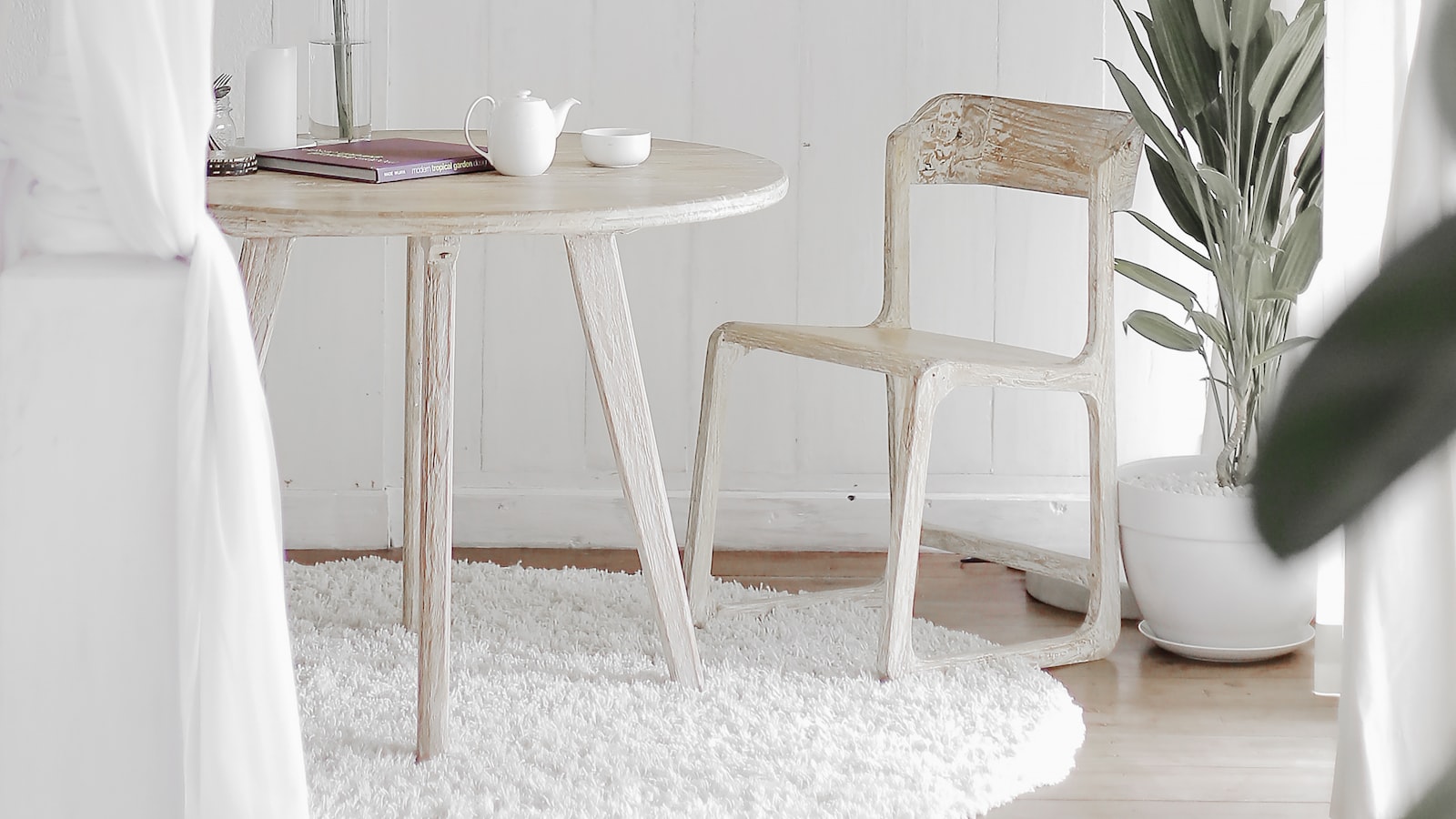
A low ceiling can make a room feel like it's pressing down on you — but it doesn't have to. The height itself rarely changes, yet the feeling of height is surprisingly easy to shift. With a handful of styling moves that guide the eye upward and let the walls breathe, you can make even a snug, low-slung room feel taller, lighter, and far more open than the tape measure says it is.
Draw the eye upward#
The eye reads height through vertical lines, so the most powerful thing you can do for a low ceiling is give the eye reasons to travel up. Anything tall and slender — a narrow bookcase, a vertical stripe, a column of art stacked one piece above another, a tall plant in the corner — pulls the gaze skyward and makes the wall feel taller than it is. Horizontal lines do the opposite, flattening and widening a room, so lean into the vertical wherever you can.
You can build this verticality in quietly. A pair of tall, slim mirrors stretches the wall upward while bouncing light around. Floor-to-near-ceiling shelving leads the eye on a long climb. Even something as simple as hanging your art a little higher than feels natural nudges the whole room's center of gravity upward. The trick is consistency: when several elements all reach upward together, the room reads as taller without any one of them shouting about it.
Height is something the eye decides, not just the tape measure. Give it enough vertical lines to climb, and a low room starts to feel tall.
Be sparing with anything that emphasizes the horizontal. A wide, low piece of art hung across the wall, a band of contrasting trim at chair height, or a long horizontal stripe will all visually press the ceiling down. You don't have to ban them entirely — just be aware of which way each line is sending the eye, and favor the ones that send it up.
Hang curtains high and wide#
Window treatments are one of the easiest ways to fake extra height, and almost everyone hangs them too low. Instead of mounting the curtain rod just above the window frame, lift it close to the ceiling and let the curtains fall all the way to the floor. That long, unbroken sweep of fabric draws the eye up the full height of the wall and tricks it into reading the window — and the room — as far taller than it is.
Going a touch wider helps too. Extending the rod a little beyond each side of the window lets the curtains sit mostly against the wall rather than blocking the glass, which makes the window look bigger and lets in more light. Choose fabric with a subtle vertical drape and keep the color close to the wall so the curtains blend in and stretch rather than chop up the wall. Floor-length is essential here — curtains that stop short, hovering above the floor, do the opposite and make the ceiling feel even lower.
This single change often does more than any other to lift a room. It costs little, requires no construction, and works in nearly any space with a window. If you do nothing else for a low ceiling, hang your curtains high.
Choose low, leggy furniture#
Furniture has an outsized effect on how tall a ceiling feels, because the room's sense of height is really about the space above your furniture. Tall, bulky pieces eat into that space and leave only a thin band of air overhead, which makes the ceiling press down. Low-profile furniture does the reverse: a low sofa, a platform bed, a short bookcase, a coffee table that sits close to the floor all leave more open air above, and that openness reads as height.
Pieces that sit on visible legs help even more, because you can see the floor flowing beneath them. That glimpse of continuous floor makes the whole room feel lighter and more open than furniture that sits flat and solid like a block. The same goes for keeping things low overall — when your eye line across the room stays well below the ceiling, there's room for it to rise, and the ceiling feels comfortably distant rather than close.
Resist the urge to fill the upper half of the walls with heavy storage or tall cabinetry, which boxes the room in from above. If you need height for storage, keep it slim and let the lower portion of the room stay open and low. The contrast between low furniture and the airy space above it is exactly what makes a modest ceiling feel generous.
Use color and light to lift the room#
Color does quiet, powerful work on a low ceiling. A light, continuous color palette — pale walls and an even paler or matching ceiling — blurs the line where the wall ends and the ceiling begins, so the eye can't easily tell where the room stops. That ambiguity makes the ceiling feel higher because there's no hard boundary to register. Painting the ceiling a soft white or a whisper lighter than the walls is one of the simplest height-boosting moves there is.
Lighting matters just as much. Recessed or flush-mounted fixtures sit tight against the ceiling and keep that overhead space clear, where a low-hanging pendant or chandelier would chop into it and pull the ceiling down. Uplighting works beautifully too: a floor lamp or wall sconce that throws light upward washes the ceiling in brightness, and a bright ceiling always reads as taller than a dim, shadowy one. Plenty of natural light helps as well, so keep windows clear and let the daylight in.
A few practical cautions: if making the room feel taller has you thinking about moving lighting, removing a bulky overhead fixture, or any change to wiring, that's work for a licensed electrician — never a DIY guess. And if you're considering anything structural, like opening up the ceiling itself, consult a qualified professional before you start. The good news is that most of what makes a low ceiling feel higher needs no construction at all.
A low ceiling is a feeling more than a fact, and feelings are something you can design. Send the eye climbing with vertical lines, hang your curtains high and wide, keep your furniture low and leggy, and let light color and upward light open the room. Do that, and the ceiling that once seemed to press down will quietly lift — proof that the right moves can give you all the height you need, without raising the roof an inch.