A well-planned room is something you feel the moment you walk in, even if you can't say why. Movement is easy, conversation flows, the eye knows where to land. A poorly planned one feels off in ways that are just as wordless. The difference rarely comes down to what you own — it comes down to how thoughtfully it's arranged.
Find the focal point first#
Every room wants an anchor: a single feature that the eye lands on first and that the rest of the layout organizes around. Before you decide where the sofa goes, decide what the room is about. A fireplace, a beautiful window with a view, a striking piece of art, or the natural gathering spot in an open plan — any of these can be the star.
Once you've named the focal point, your biggest pieces should acknowledge it. Seating that faces or frames the fireplace, a bed positioned to greet the morning light, chairs angled toward the view — these choices give the room a sense of purpose and calm. When furniture ignores the focal point, the space feels aimless, as if no one quite decided what it was for.
Some rooms hand you a focal point; others ask you to create one. A blank, featureless room is an opportunity, not a problem — a bold piece of art, a generous mirror, or a single statement piece of furniture can become the anchor you build around. The key is that you choose it deliberately rather than letting the television win by default. Decide what you want to draw the eye, and the rest of the plan starts to fall into place around it.
Measure, then plan on paper#
The most expensive layout mistakes are the ones you make with your back and a heavy sofa. Save yourself the strain and the regret by planning before you lift anything. Measure the room — walls, doorways, windows, the swing of every door, the radiator, the awkward jog in the wall — and write it all down.
Then sketch it out. Graph paper or a simple app lets you move scaled shapes around in minutes, testing arrangements that would take an hour to try in real life. This is also where you catch the problems that aren't obvious standing in an empty room: a sofa that blocks a window, a path that forces you to squeeze past a chair, a piece that's simply too large for the space it's destined for. Planning on paper turns guesswork into something you can actually see.
Good layout is invisible — you never notice it, you only notice when it's missing.
Pay special attention to scale, the quiet hero of every good layout. A room full of pieces that are all the same visual weight feels flat; one where everything is oversized feels cramped; one where everything is small feels timid. Aim for a mix — one generous anchoring piece, some medium players, and a few lighter accents — so the eye travels comfortably around the room. Getting scale right matters far more than getting any particular style right, and you can test it all on paper before a single thing moves.
Protect the flow#
A room can be beautifully furnished and still feel wrong if you can't move through it with ease. Flow — the clear, unobstructed paths people take through a space — is the part of layout that's easiest to overlook and most jarring when it's missing.
Trace the routes people actually walk: from the door to the seating, from the seating to the window, through to the next room. Those paths need to stay clear and reasonably generous, so no one has to turn sideways or detour around a coffee table. A layout that's gorgeous to look at but obstacle-ridden to live in has failed at its real job. As a rule of thumb, give main walkways enough room for a person to pass comfortably, and keep the route between key points as direct as the room allows.
Flow also means leaving a little breathing space around furniture rather than pushing everything together. Pieces crammed edge to edge make a room feel tense and smaller than it is, while a few inches of air around them lets the whole space relax. The room should feel easy to inhabit, not like a puzzle to navigate. Trust your body here — if a path feels awkward when you walk it, it is, and the arrangement needs another look.
Arrange for connection#
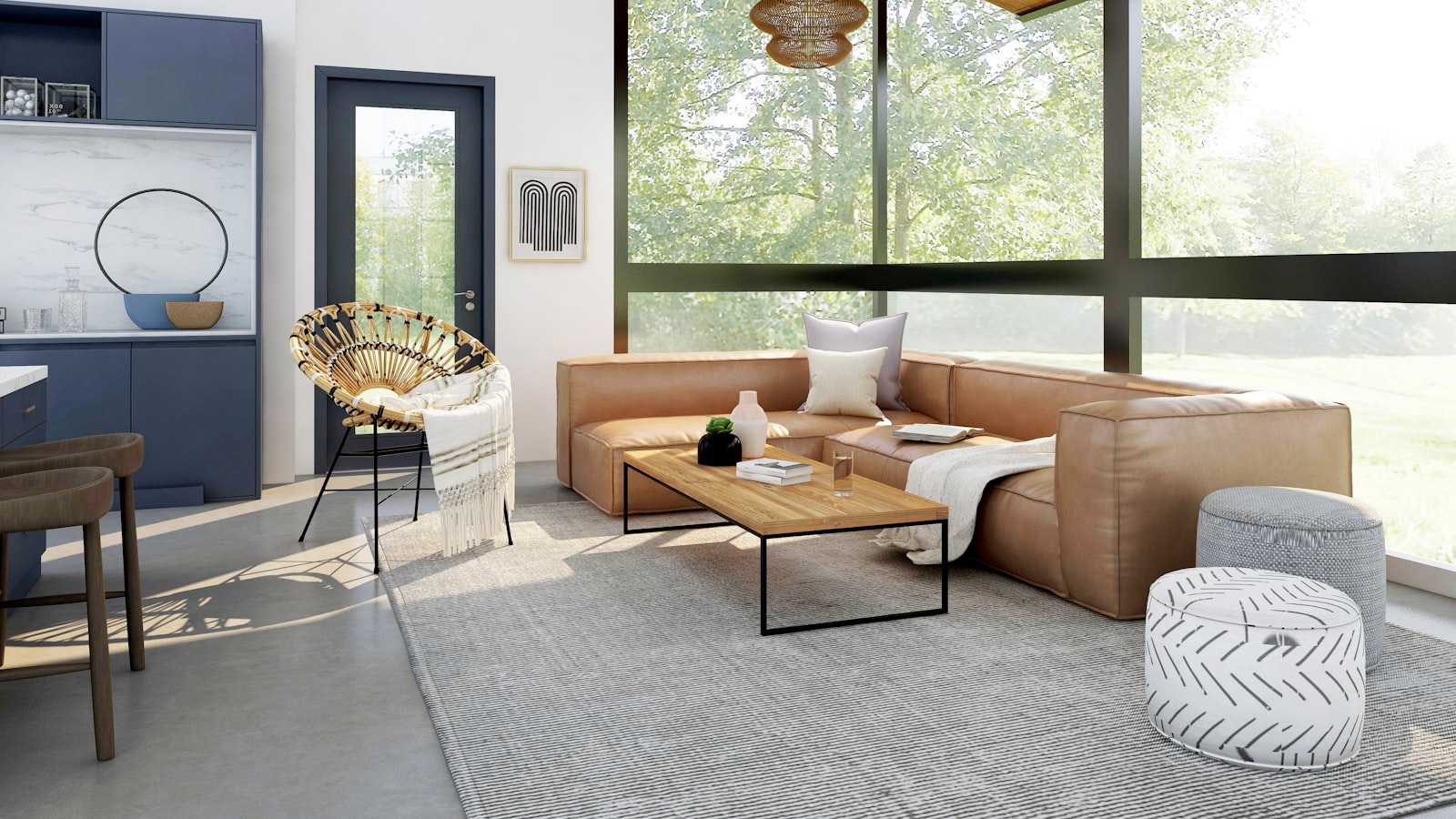
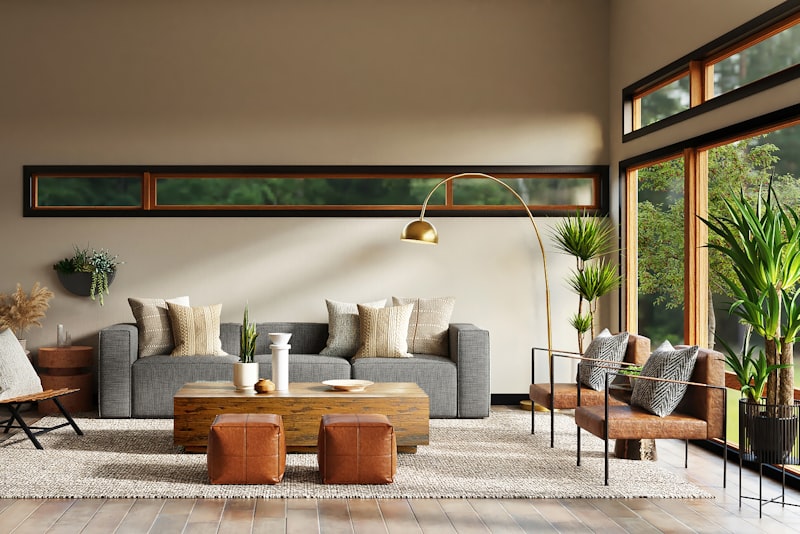
Here's the move that transforms a room more than any other: pull the furniture away from the walls. The instinct to line every piece up against the perimeter is strong, but it almost always creates a cold, cavernous middle and conversations shouted across a void.
Instead, gather seating into a group where people can talk without raising their voices or craning their necks. A few practical guides make this easy:
- Keep seats close enough that someone could pass a cup of coffee without getting up.
- Anchor the grouping with a rug large enough that at least the front legs of each piece sit on it.
- Angle a chair or two inward so the arrangement feels like a circle of conversation, not a row of seats.
Even a few inches of space behind a sofa, with a console or a slim table tucked in, can make a room feel more intentional and considered. The goal is intimacy — a layout that invites people to settle in and face one another rather than spread out along the edges. This single shift is what makes a room feel hospitable, and it works in spaces of almost any size.
Planning a layout isn't about following rigid formulas; it's about reading your particular room and the way you genuinely live in it. Find your anchor, plan before you lift, protect the paths, and gather people together, and the result is a space that simply works — one you move through without thinking and settle into without trying. That ease is the whole point. When a layout is right, the room disappears and life takes over, which is exactly what a well-designed home should do.