Decorating a small space is genuinely satisfying once you know what you're doing — but a few common missteps can quietly make a compact room feel even smaller and busier than it is. The encouraging part is that these mistakes are easy to spot and easier to fix. Most of the time, making a small room feel bigger isn't about adding anything; it's about avoiding the handful of habits that work against you.
Choosing furniture that's the wrong scale#
The most common small-space mistake is also the most understandable: buying furniture that's simply too big for the room. An oversized sofa, a bulky sectional, a dining table built for eight — these dominate a small space, block the natural flow, and leave you squeezing past furniture to cross the room. Scale is everything in a compact home, and furniture should be chosen for the room, not in spite of it.
But there's a subtler version of this mistake too: going so small that nothing feels comfortable or grounded. A scattering of tiny, flimsy pieces can make a room feel fussy and unsettled, like a doll's house. The goal isn't miniature furniture — it's right-sized furniture. One properly scaled sofa you love will serve a small living room far better than a giant one that swallows it or a token loveseat that leaves everyone perched and uncomfortable.
Before you buy anything substantial, measure the room and measure the piece, then tape out its footprint on the floor so you can see how much space it really claims and whether there's a comfortable path around it. Look for furniture with clean lines and visible legs, too — pieces that let you see the floor underneath feel lighter and take up less visual room than solid, skirted ones that sit like blocks. In a small space, that sense of air around and beneath your furniture is what keeps the room breathing.
Pushing everything against the walls#
It feels logical to shove every piece of furniture flat against the walls to "open up" the middle of a small room — and it's one of the most common things people get wrong. Lining the perimeter with furniture often makes a room feel smaller, not larger, because it creates a dead, awkward void in the center and emphasizes exactly how little floor there is. A room arranged entirely around its edges tends to feel like a waiting room rather than a home.
Pulling pieces even slightly away from the walls, or floating a sofa to define a seating area, can make a small space feel more intentional and surprisingly more spacious. It creates a sense of zones and a natural conversation grouping, which reads as thoughtful design rather than furniture simply parked wherever it fits. You don't need much room to do this — even a few inches of breathing space behind a piece changes how the whole arrangement feels.
A small room doesn't need every wall lined with furniture. It needs a layout that flows, with clear paths and a little breathing room around what matters.
The real aim is good flow. Stand at the doorway and trace how you'd actually move through the room; if you're weaving around obstacles or sidestepping a coffee table to reach the sofa, the layout is fighting you. Clear, comfortable paths make a small space feel generous, while a cramped, obstacle-strewn route makes even a decent-sized room feel tight.
Letting clutter take over#
Nothing shrinks a small room faster than clutter, and nothing opens one up faster than clearing it. In a compact home, every surface is precious and every visible mess is amplified, so the stack of mail, the tangle of cords, and the odds and ends on every shelf weigh far more heavily than they would in a larger space. Visible clutter and a small room feel like the same problem — but clutter is the part you can fix in an afternoon.
The cure starts before you buy a single basket: own less. Editing your belongings down to what you genuinely use and love is the most powerful small-space move there is, because every item needs a home, and there simply isn't room to spare. Once you've pared down, give the everyday clutter a closed home — cabinets, drawers, lidded baskets — and reserve open shelves and clear surfaces for just a few things you actually want on display. The contrast between a curated few objects and everything else tucked away is what makes a small room feel calm and styled rather than cramped.
Try this small discipline: leave some surfaces deliberately empty. Every shelf doesn't need filling, every wall doesn't need covering, every corner doesn't need a thing in it. That intentional emptiness gives the eye somewhere to rest, and rest is what makes a small room feel spacious. Resisting the urge to fill every inch is one of the most stylish things you can do in a compact home.
Ignoring light and going too dark#
Light is a small room's best friend, and treating a compact space like a cozy cave is a mistake that makes it feel even tighter. Heavy, dark window treatments that block the daylight, a single dim overhead bulb doing all the work, furniture crowding the windows — all of it drains the brightness that makes a small room feel open. Letting in as much natural light as possible, and keeping windows clear and unblocked, instantly makes a space feel larger and more alive.
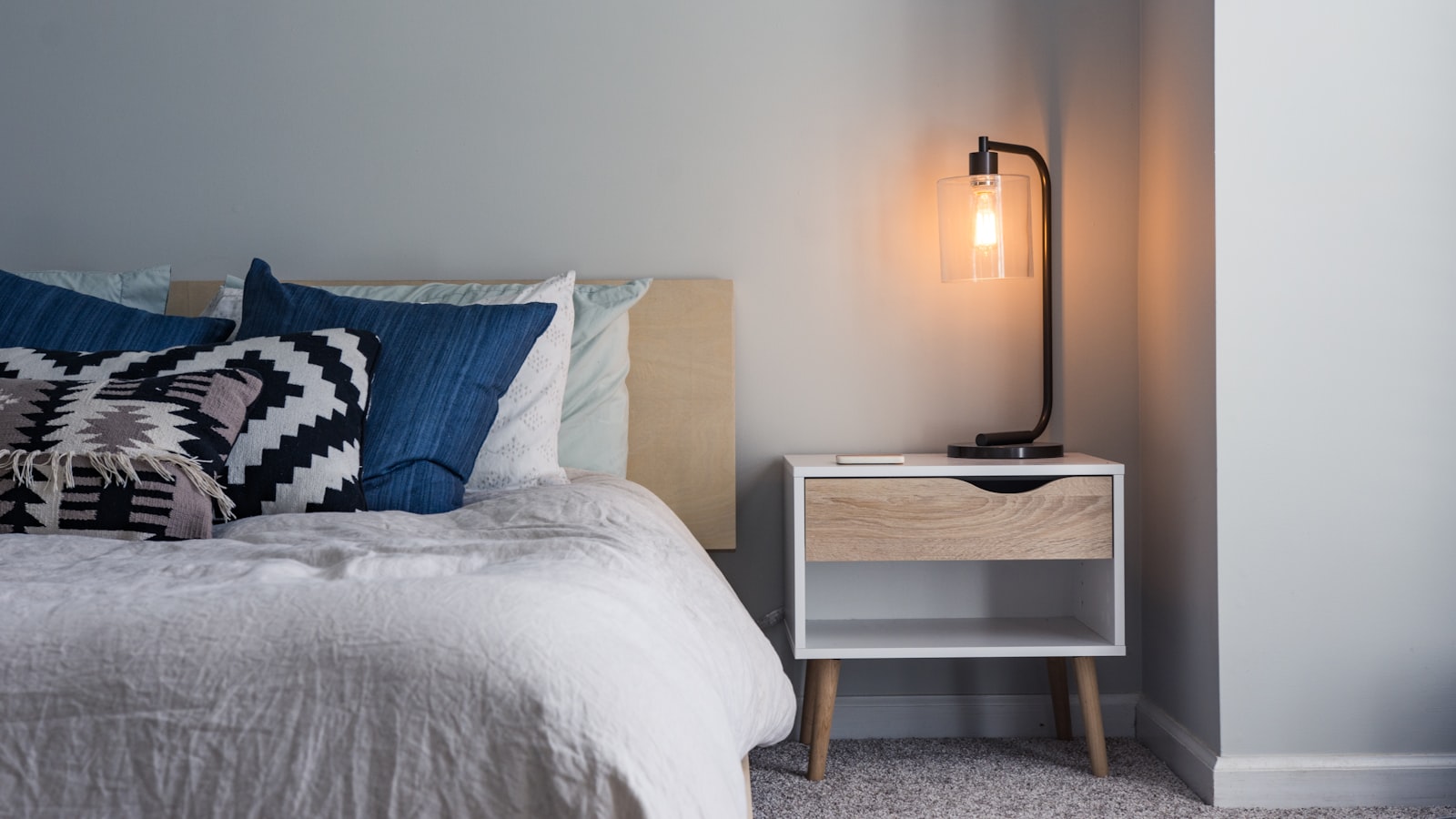
The fix is to think in layers. One overhead light flattens a room and leaves the corners dim and shadowy, which makes the space feel smaller and harder to read. Adding a few sources at different heights — a table lamp, a floor lamp, a wall light — fills in those shadows, gives the room depth, and lets you brighten the whole space in the evening. A well-lit small room feels significantly more open than a dim one of the exact same size, so don't underestimate how much a couple of extra lamps can transform a space.
A mirror earns its place here too. Positioned to catch and bounce daylight, a mirror brings light deeper into a room and adds a sense of depth that makes the space feel larger than it is. It's one of the oldest tricks in decorating because it genuinely works — a small space with good light and a well-placed mirror always feels bigger than its square footage suggests.
None of these mistakes are hard to undo, and that's the heartening truth about small-space decorating: the things holding your room back are almost always fixable without spending much or knocking down a wall. Right-size your furniture, give it room to breathe, edit the clutter, and let the light in. Avoid these few common traps, and your small space will reward you with a home that feels open, calm, and far more generous than its footprint ever promised.