Of all the small decisions in decorating, rug size is the one that quietly makes or breaks a room. A rug that's the right size pulls the furniture into a single, settled arrangement and makes the whole space feel intentional. A rug that's too small does the opposite, leaving everything looking adrift no matter how lovely each piece is on its own.
Why bigger almost always wins#
If you take one idea from this, let it be this: when in doubt, size up. The single most common rug mistake by a wide margin is going too small, and it's an easy trap to fall into. A modest rug looks perfectly reasonable rolled up in a shop, then arrives home and seems to shrink, stranding the furniture on bare floor around a little island of pattern in the middle. The room reads as disconnected, like the pieces never quite agreed to be in the same place.
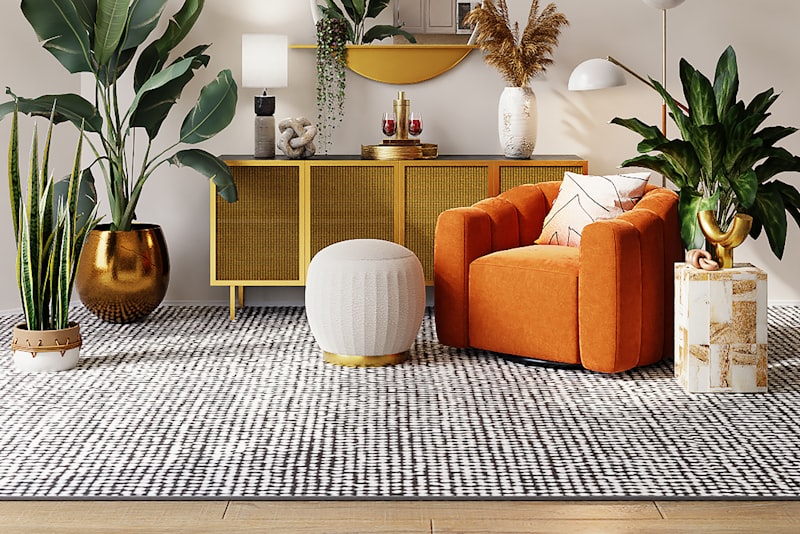
A generous rug solves this instantly. By reaching under or up to the furniture, it gathers everything into one frame and tells your eye where the space begins and ends. The room suddenly feels grounded and deliberate, as though it was planned rather than assembled. This is why designers reach for the larger size again and again — the difference in how finished a room looks is dramatic, and it's almost entirely down to scale.
There's a reassuring practicality here, too. A rug that's a touch too big is far easier to live with than one that's too small. The oversized rug simply tucks a little more floor under your furniture and looks lush and intentional doing it. The undersized rug, by contrast, never stops looking like a mistake, no matter how you nudge the furniture around it. Given the choice between the two errors, lean big every time.
A rug that's slightly too large makes a room feel grand and considered. A rug that's too small makes even beautiful furniture look like it's floating with nowhere to land.
Sizing a living room rug#
The living room is where rug size matters most, because it's where the most furniture has to relate to one another. The principle is simple: the rug should be large enough to connect the seating, not just sit politely in the middle of it. There are three workable approaches, and which one you choose depends on the size of your rug and your room.
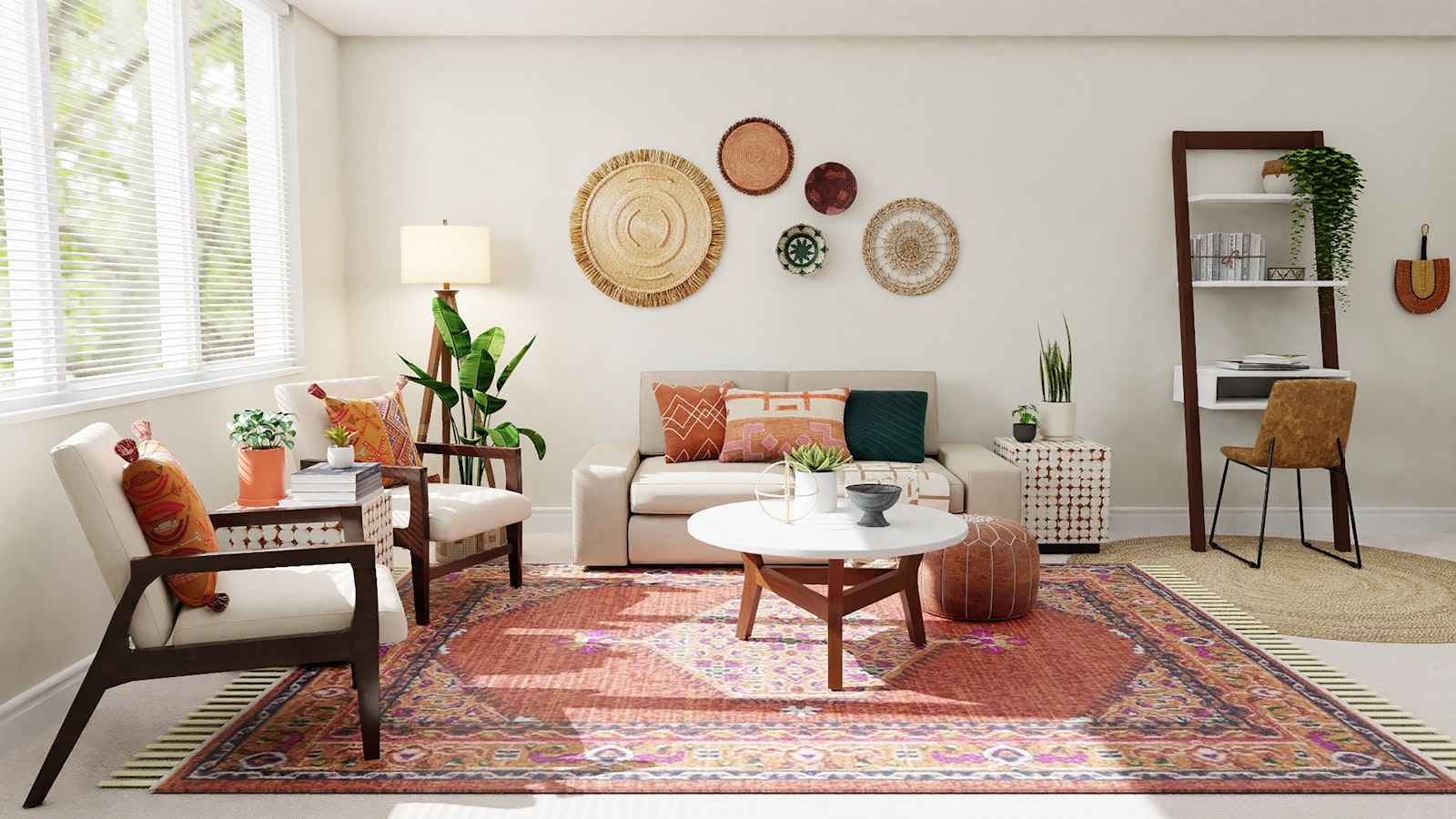
The most luxurious option is a rug big enough to sit fully under all the main pieces — sofa, chairs, and coffee table — with a margin of rug showing around the outer edges. This makes the whole seating area read as one cohesive zone and feels wonderfully anchored. The middle-ground approach, and the most common, is a rug that reaches under the front legs of the sofa and chairs while their back legs rest on the floor. This still ties everything together visually and is the easy way to get a settled look without buying the largest rug in the shop.
The one arrangement to avoid is the small rug that touches none of the furniture, floating under the coffee table alone while every seat sits off it on bare floor. That's the layout that makes a room feel scattered. If your rug is on the smaller side, at minimum slide it so the front legs of the sofa land on it — that small move alone pulls the seating into the rug's orbit and rescues the whole arrangement. The more the furniture connects to the rug, the more whole the room feels.
Sizing for dining rooms and bedrooms#
Dining rooms have one firm rule that makes sizing easy: the chairs must stay on the rug even when pulled out. Picture the moment someone sits down and slides their chair back to settle in — if the back legs drop off the edge of the rug, the chair tips and catches, and that little lurch happens every single meal. To avoid it, choose a rug that extends well beyond the table on all sides, with enough margin that a chair stays fully on the rug when pushed back to standing.
The shape of the rug should follow the shape of the table for the most graceful result. A rectangular table pairs naturally with a rectangular rug, a round table with a round rug, echoing the lines and keeping that all-important even margin on every side. Measure your table with the chairs pulled out, add a comfortable border beyond that, and you'll land on a size that works at every dinner.
Bedrooms give you a little more freedom, since there's only one big piece to plan around. A few sizing approaches all look lovely:
- A large rug under the lower two-thirds of the bed, extending well past the sides and foot, so you step onto softness when you get up.
- A rug fully under the bed and nightstands with a generous border framing it, for the most grounded, layered feel.
- A pair of smaller runners flanking the bed, a simpler option that still gives you warmth underfoot on both sides.
Any of these works; the one to skip is a small rug floating at the foot of the bed where your feet never actually land. The whole point of a bedroom rug is that first warm step in the morning, so put the rug where your feet go.
Frame it with a little bare floor#
Sizing up does not mean covering the floor wall to wall. The most flattering rugs leave a band of bare floor showing around the edges of the room, and that border does real work. It frames the rug like a mat frames a picture, gives the floor room to breathe, and keeps the space from feeling boxed in. A rug that runs right up to the baseboards on every side can make a room feel smaller and a bit suffocating, while a clean margin of floor makes both the rug and the room look more refined.
How wide that border should be scales with the room. A larger room can carry a wider band of bare floor and look all the more elegant for it; a small room wants a slimmer margin so the rug still feels generous. The goal is an even, intentional frame — not a rug shoved into one corner with a vast expanse of floor on the other side. Aim for roughly equal floor showing on opposite sides, and the rug will sit in the room like it belongs there.
Get the size right and a rug does something quietly transformative: it stops being a thing on the floor and becomes the foundation the whole room stands on. Size up when you're unsure, connect it to your furniture, keep the dining chairs aboard, and leave a tidy frame of floor around it. Those few rules are all it takes to turn a room full of nice pieces into a space that finally feels complete.