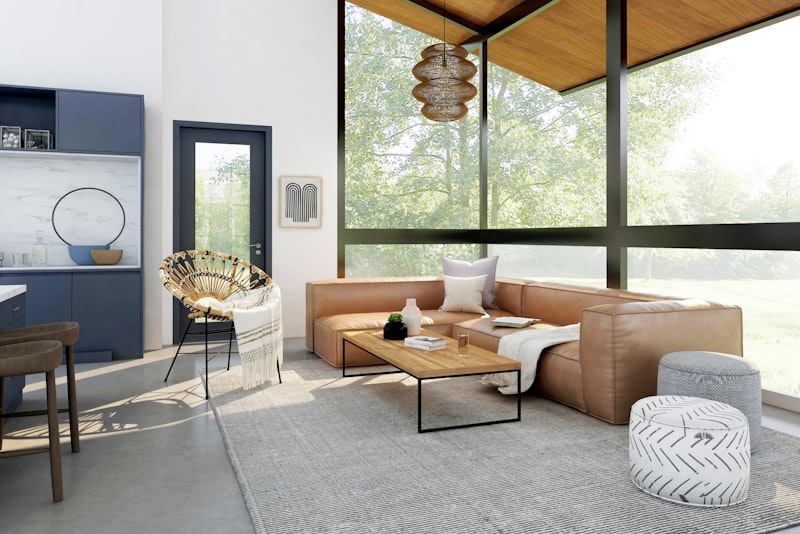
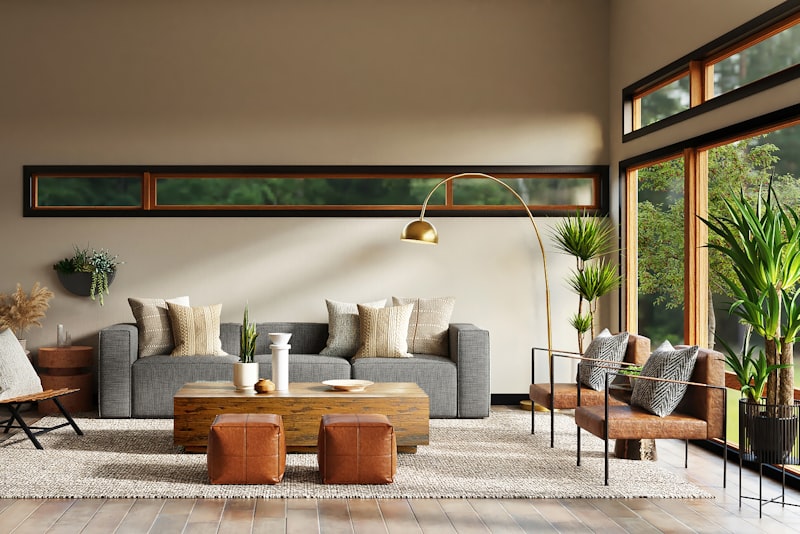
Open-plan living promises the dream: one bright, sociable space where you can cook, eat, and relax without walls between you and the people you love. But that same openness can leave a room feeling like a furniture warehouse — vast, echoey, and strangely hard to use. The art is in defining distinct areas while keeping the whole space feeling connected.
Decide what the space needs to do#
Before you place a single piece of furniture, get clear on the jobs this room has to perform. Most open-plan spaces juggle three roles — cooking, eating, and lounging — and sometimes a fourth, like a work corner or a play area. Naming those zones is the foundation of everything that follows, because a room that tries to be everything everywhere just feels chaotic.
Sketch the footprint and think about where each zone naturally wants to live. The kitchen is usually fixed by plumbing and appliances, so let it anchor the plan. Dining tends to sit near the kitchen for easy serving. The lounge often claims the spot with the best light or the nicest view. Once you've roughed out these territories, the room stops being one big empty hall and becomes a series of purposeful places.
Resist the urge to spread furniture evenly across the whole floor. Clustering each function into its own clear area is what makes an open plan feel organized rather than adrift.
Zone without building walls#
The magic trick of open-plan design is creating separation you can feel but mostly can't see. You want each area to have its own identity while still belonging to the larger room, and you have several quiet tools to pull that off.
Rugs are the most reliable. A rug under the lounge seating draws an invisible boundary around it — suddenly that's "the living area," distinct from the dining zone a few steps away. Furniture placement does similar work: the back of a sofa can act as a soft wall that marks where the lounge ends, and a console or bench behind it reinforces the line. Even the ceiling helps, through lighting. A pendant over the dining table and a different fixture over the lounge tell your eye that these are separate rooms sharing one roof.
Good zoning is something you sense before you notice it. You should feel like you've moved into a different room even though you never walked through a doorway.
Changes in level or material can define zones too, but those usually mean construction. If you're considering dropping a section of ceiling, adding a half-wall, or relocating the kitchen island's plumbing or wiring, that's a conversation for a licensed professional — structural, electrical, and plumbing work is never a place to wing it. Plenty of strong zoning happens with nothing more than rugs, furniture, and light.
Tie it together with a shared thread#
Here's the balance every open plan has to strike: the zones need to feel distinct, but the whole space still has to read as one harmonious room. The way you achieve unity is by carrying a common thread through every area. Most often that thread is color.
Choose a palette of a few colors and let them travel through the entire space. The kitchen, dining, and lounge can each have their own character, but if a warm clay tone appears in the kitchen tile, again in the dining chairs, and once more in a lounge cushion, your eye reads the whole room as a single, intentional composition. Repeating a wood tone, a metal finish, or a material across zones does the same quiet work of stitching everything together.
A few ways to build that sense of cohesion:
- Repeat two or three colors across all the zones so nothing feels marooned.
- Echo a material or finish — the same timber, the same black metal — from one area to the next.
- Keep your overall style consistent, even as each zone takes on its own role.
Cohesion doesn't mean everything matches. It means everything relates. A dining area can feel more formal and a lounge more relaxed while still clearly being part of the same home.
Protect the flow#
Because there are no walls to guide people, an open-plan space lives or dies on its walkways. The path from the front door to the kitchen, from the kitchen to the table, from the sofa to the hallway — all of it needs to be obvious and unobstructed. When you have to weave around a chair or sidestep a coffee table to cross the room, the openness you paid for turns into a daily obstacle course.
Lay out your zones so clear lanes run between them. Keep main routes wide enough for two people to pass comfortably, and make sure the busiest path — usually the run between the kitchen and the dining table — stays completely clear when someone's carrying a hot dish. The lounge can be the cozier, more enclosed-feeling zone, but it shouldn't block the way to anywhere else.
Mapping it out with painter's tape on the floor before you commit is worth every minute. Walk the routes, mime carrying plates, imagine the room full of guests. You'll feel a pinch point long before you'd ever spot it on paper, and it's far easier to adjust tape than to shove a loaded bookshelf across the floor.
Let it live as one home#
An open-plan space rewards a little planning with years of easy, sociable living. Define your zones, separate them softly with rugs and furniture and light, tie everything together with a shared palette, and guard the walkways that connect it all. Get those four things working and the room delivers on its original promise — togetherness without crowding, openness without chaos.
Start where you can. Even just floating the rug under your lounge seating and pulling the sofa off the wall will sharpen the whole space immediately. From there, layer in the lighting and the shared colors, and watch one big empty hall turn into the warm, well-defined heart of your home.