When a room starts to feel stale, the instinct is to assume something big needs to change — new furniture, fresh paint, maybe a whole renovation. But more often, the room doesn't need replacing. It needs re-seeing. With nothing more than time, a critical eye, and the things you already own, you can make a familiar space feel genuinely new.
Rearrange before you replace#
The fastest, cheapest refresh costs nothing at all: move things. We tend to place furniture once, when we first move in, and then never question it again. But a layout that made sense years ago may be quietly working against the room now, and simply shifting the pieces can reveal a space you didn't know you had.
Start by pulling the largest piece — the sofa, the bed — and considering a different wall or angle. Floating furniture slightly away from the walls can make a room feel more intentional and even larger, since it gives everything room to breathe. Try turning a seating arrangement toward a window or a natural focal point rather than defaulting to the television. Walk the room and notice where you actually want to sit, then arrange around that truth.
Even small moves carry weight. Swapping a rug from one room to another, rotating which chair faces the door, or relocating a bookshelf to a new wall can reset how the whole space reads. Because nothing is permanent, you're free to experiment — live with a new arrangement for a few days and see how it feels before deciding. The room is yours to play with, and play is exactly the right mindset. Pay attention to where the light falls, too: a reading chair moved into a sunny corner or a desk turned toward the window can change how often you actually use a piece, which is its own kind of refresh that costs nothing at all.
Edit first, style second#
A surprising amount of "tired" is really just "too much." Over time, rooms accumulate — objects on every surface, a gallery of things we stopped seeing long ago. Before adding anything, take things away, because a refresh begins with subtraction.
Clear a surface completely, then put back only what you love or use. The empty space you create is not a void to fill; it's the breathing room that makes the pieces you keep feel chosen and special. This single act of editing can make a cluttered room feel calm and considered in an afternoon, and it costs nothing but honesty about what's earning its keep.
A refreshed room isn't one that has more in it; it's one where everything left has a reason to be there.
Once you've edited, restyle what remains with a stylist's eye. Group objects in odd numbers, vary their heights, and let a few of them have space around them. Turn the spines of your favorite books outward, lean a piece of art instead of hanging it, stack a couple of vessels and leave the rest in a cabinet. These are free moves, and they're the difference between a surface that looks accumulated and one that looks designed. Trust your own taste here — the arrangement that makes you pause and smile is the right one.
Change the mood with textiles and light#
If you do spend a little, spend it where it changes the most for the least. Textiles and lighting are the two levers that shift a room's entire mood without any structural work, and they're easy to swap as your taste evolves.
New cushion covers, a throw, or fresh bedding can introduce a whole new palette to a room in minutes. Curtains are a quietly powerful change too — hanging them higher and wider than the window makes a room feel taller and grander, and a lighter or heavier fabric shifts the whole atmosphere with the seasons. Layering in a different texture, like swapping smooth cotton for nubby linen or wool, adds depth that reads as richness.
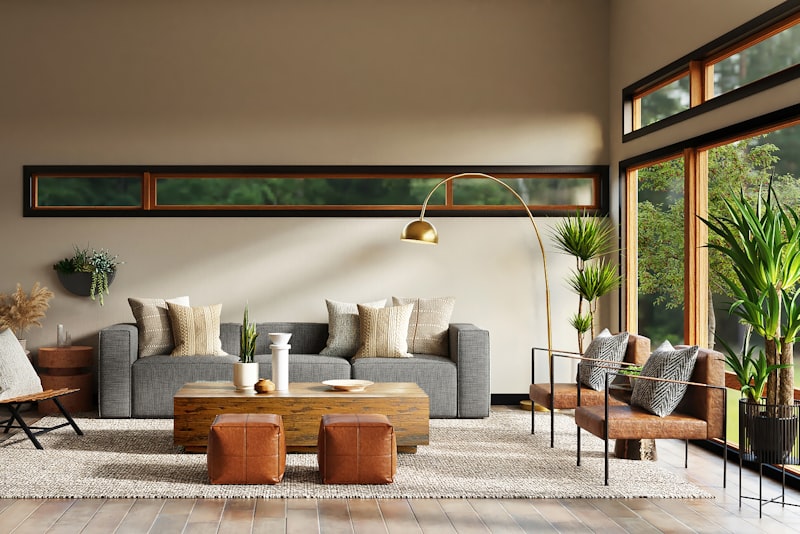
Light is the other great mood-changer. Most rooms rely too heavily on a single overhead fixture, which flattens everything. Add a couple of lamps at different heights to create warm pools of light, switch to warmer-toned bulbs, and a room that felt cold and ordinary becomes inviting after dark. These are simple plug-in changes anyone can make. If you ever want to add hardwired fixtures or move a switch, bring in a licensed electrician — but you'll be amazed how far a few good lamps go on their own.
Shop your own home#
Before buying a single new thing, go shopping in the rooms you already have. The art that's grown invisible in the hallway might be exactly what an empty wall in the bedroom needs. A vase, a stack of books, a chair, a basket — moved into a new context, your own belongings can feel surprisingly fresh.
A few ideas to spark the hunt:
- Move art and mirrors between rooms so familiar pieces land somewhere new.
- Borrow a side chair, lamp, or rug from a space that has one to spare.
- Bring in something living — clippings, branches, or a plant relocated from another room.
This habit does more than save money. It trains your eye to see your home as a flexible kit of parts rather than a set of fixed rooms, which is the real secret behind spaces that always feel current. When you do eventually buy something, you'll do it deliberately, to fill a genuine gap, rather than to chase a feeling that rearranging could have given you for free.
A room rarely needs a renovation to feel loved again. It needs you to look at it with fresh eyes, take a little away, move the rest with intention, and add warmth through light and texture. Do that, and you'll discover something better than a new room — you'll rediscover the one you already have, transformed by nothing more than care and attention. That's a refresh no budget can buy and every home deserves.