A media console does more heavy lifting than almost any piece in a living room. It carries your screen, hides a tangle of devices and cords, anchors the seating, and quietly sets the tone for the whole space. Get it right and the room feels calm and pulled together; get it wrong and you'll stare at an awkward, cluttered focal point every evening.
Start with the proportions#
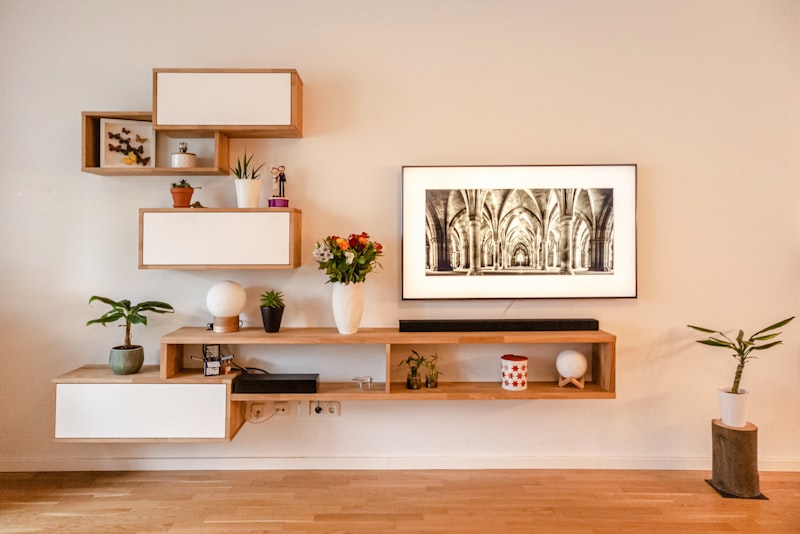
The most common media console mistake is also the easiest to avoid: a console that's too narrow for the screen above it. When a wide screen perches on a skimpy stand, the whole arrangement looks top-heavy and unstable, like a big head on small shoulders. The fix is simple and worth committing to memory — your console should be noticeably wider than your screen, with a comfortable margin of cabinet extending past each side. That overhang grounds the screen and makes the pairing feel balanced and intentional.
Width is only half the proportion story; height matters just as much for comfort. If you mostly watch from the sofa, you want the center of the screen to land near your eye level when you're seated, so your neck stays relaxed through a long evening. A lower, longer console suits a wall-mounted screen and a low sofa beautifully, while a taller console better fits a screen that sits directly on top. Before you buy, sit on your sofa, note where your eyeline falls, and choose a height that puts the screen there rather than forcing you to look up or down.
Sit on your sofa and hold up a hand where your eyes land. That line is where the middle of your screen wants to be, and the console height should make it happen.
Finally, weigh the console against the room, not just the screen. In a large, open living room, a long low console can stretch out and balance the space, while in a small room that same piece might overwhelm it, and a more compact design will breathe better. Measure the wall it will live against and leave room around it so it doesn't crowd doorways or walkways. A console that's right for the screen but wrong for the room never quite settles in.
Plan for the gear it has to hold#
A media console is, at heart, a workhorse for electronics, so think honestly about everything it needs to carry before you fall for a look. Beyond the screen, you likely have a streaming box, a game console, a sound bar or speakers, maybe a router, and a small zoo of remotes and accessories. Tally up what you actually own, measure the bulkier pieces, and make sure the console has shelves and compartments sized to hold them with a little room to spare. A console that can't fit your sound bar is a beautiful piece of furniture and a daily frustration.
Cord management is the unglamorous detail that separates a tidy console from a messy one, so look for it deliberately. The best media consoles include openings in the back panel for cables to pass through, and channels or gaps that let cords run between shelves without spilling out the front. This is what keeps the snake's nest of wires out of sight and your space looking calm. If a console you love lacks these, you can add adhesive cord clips and a power strip mounted out of view, but built-in routing makes life far easier.
One safety point worth flagging: electronics throw off heat, and trapped heat shortens their life. Make sure whatever holds your devices allows air to move around them, especially a game console or an amplifier in a closed cabinet. Open shelving solves this naturally; closed cabinets need ventilation gaps, a perforated back, or doors you can leave cracked. And if young children share your home, choosing a sturdy, low-profile console and securing a top-heavy unit to the wall is a small step with real peace of mind. Good airflow and stability protect both your gear and your household.
Match the storage to your habits#
Media consoles generally come in two camps — open shelving or closed cabinets — and the right one depends entirely on how you actually live, not how you imagine you might. Open shelves keep everything in easy reach, let devices breathe, and give you spots to style with books, plants, or a favorite object. They look light and airy. The catch is that open shelving shows everything, including the cords, the dust, and the clutter, so it rewards people who stay reasonably tidy and keep their gear neat.
Closed cabinets, on the other hand, are the gift of concealment. Doors hide the devices, the cables, the stack of board games and spare remotes, and let the console present a clean, serene face to the room. This is the kinder choice if your media setup tends toward chaos or if you simply prefer a minimal look. Many of the best consoles blend both — closed cabinets for the unsightly gear and a shelf or two left open for the pieces you don't mind showing — giving you the calm of concealment with a touch of display.
Whatever storage you choose, give a thought to how the surface and the open spots will be used and styled. The top of a console is prime real estate, so leave room for a lamp, a small stack of books, or a plant that softens all the technology below. If you have open shelves, balance the electronics with a few warm, non-tech objects so the console reads as furniture rather than an equipment rack. These small styling moves are what let a hardworking media console feel like a designed part of the room instead of a utilitarian afterthought.
Choose a piece that lasts#
A media console sits in the most-looked-at spot in the room, so it pays to choose one you'll still love years from now. Technology changes constantly — screens get thinner, devices come and go — but a well-made console with clean, classic lines outlasts every passing trend in home electronics. Favor solid construction, a finish that suits the rest of your furniture, and a shape simple enough that it won't feel dated when your next screen arrives. Spend your boldness on the things around it, like art or a rug, and let the console itself be a steady, timeless anchor.
In the end, the best media console is the one that fits your screen, fits your room, holds your gear gracefully, and hides what you'd rather not see. Get the proportions right, plan for the devices and their cords and heat, match the storage to how you really live, and choose a piece built to last, and you'll have a focal point that looks intentional and works without a fuss every single night. That quiet competence — looking good while doing a hard job invisibly — is exactly what a great piece of furniture is for.